The question
How much radiation hits the surface of the Moon, how does it change with the Sun's activity, and how much do craters, hills and caves shield against it?
Why it's hard to know
The Moon has no atmosphere and no magnetic field. Particles from the Sun and from far outside the Solar System hit the ground directly, and some knock new particles loose from the soil itself. Only one instrument has measured this actively on the surface, on China's Chang'e-4 lander, and it stayed in one spot. No rover has ever measured radiation as it moves.
The experiment
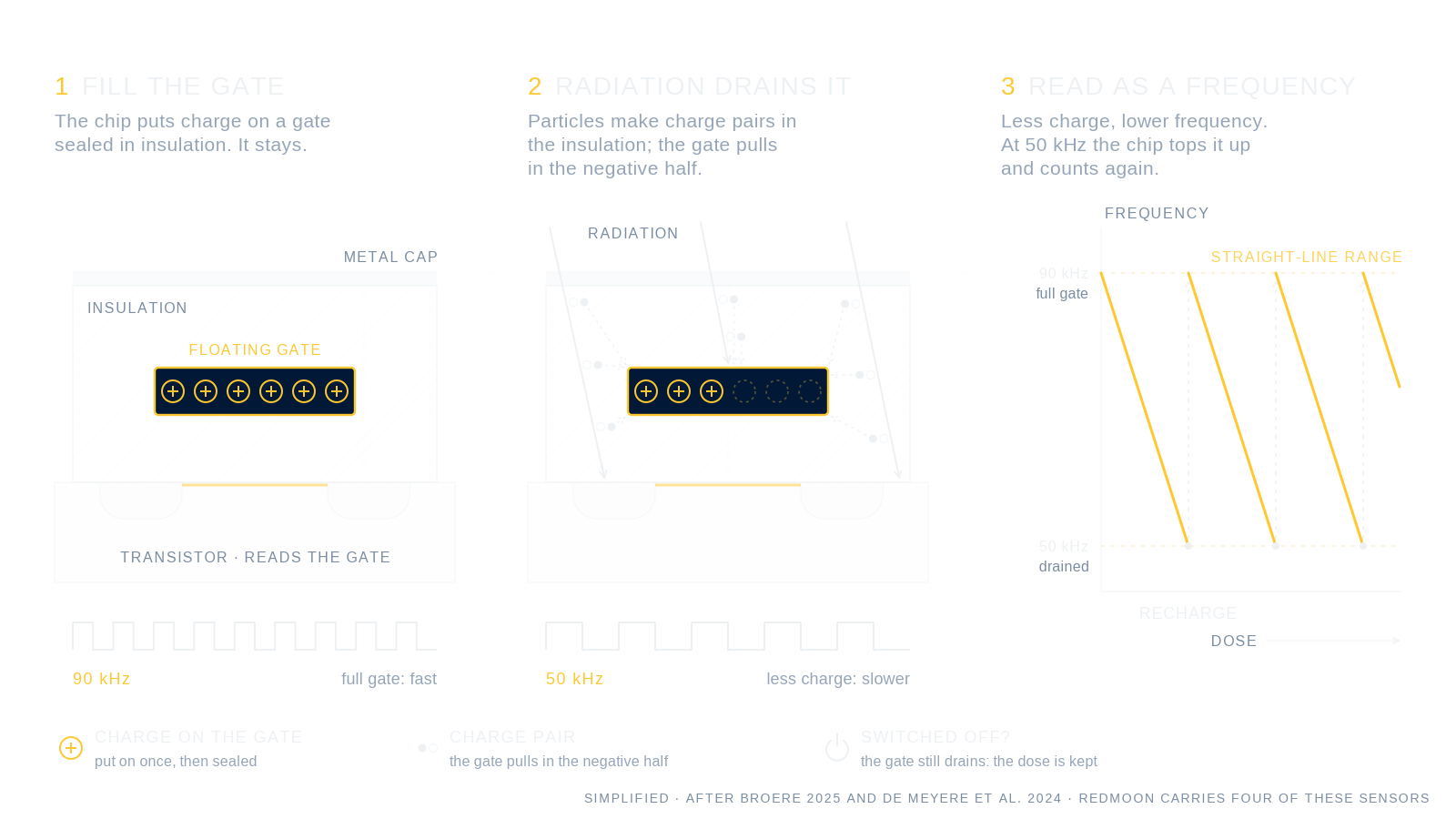
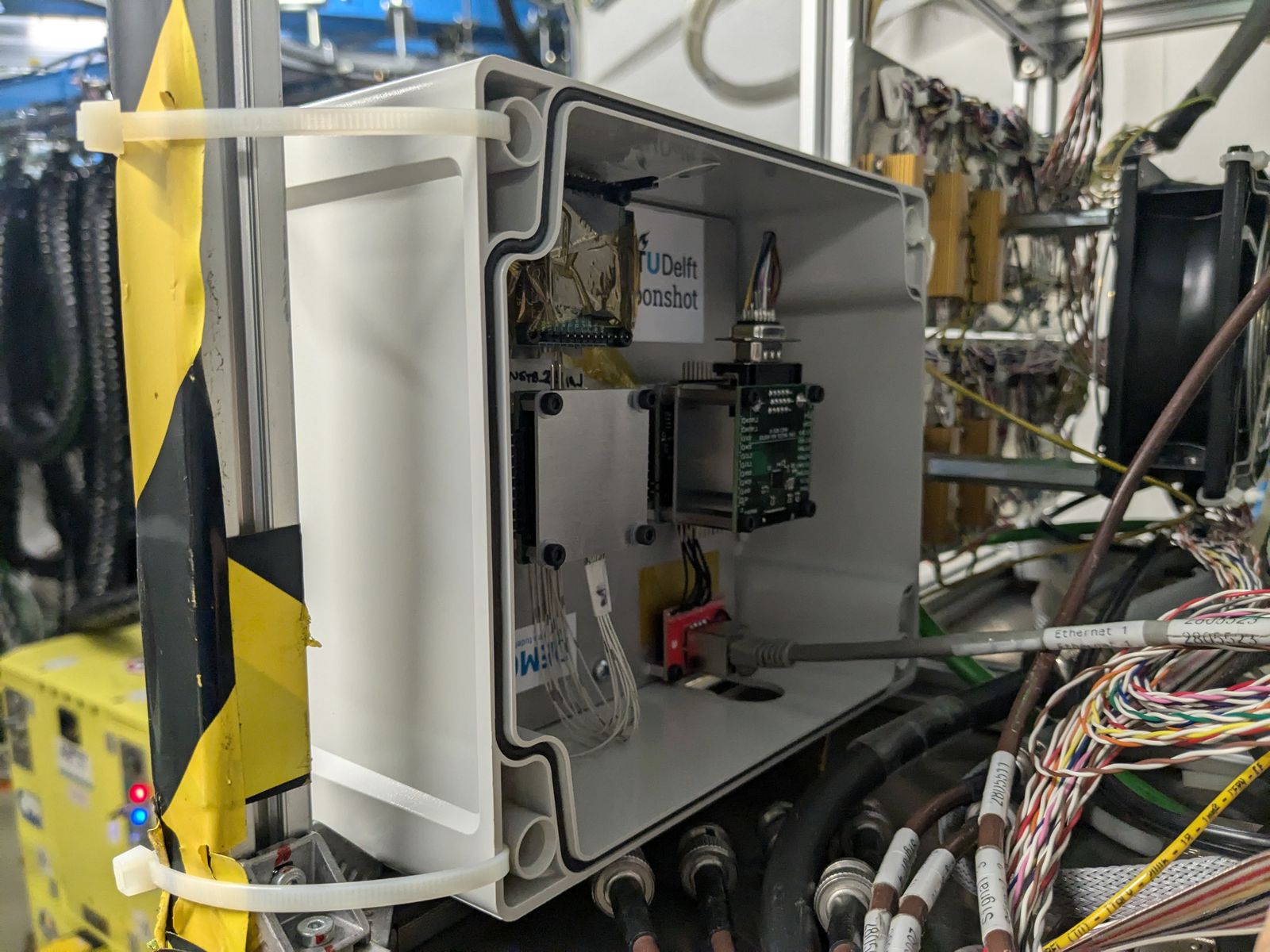
REDMOON (Radiation Environment and Dose Monitoring On-board a Nano-rover) is built around four floating-gate dosimeters (FGDOS), sensors made by Sealicon with CERN. They're tiny, cheap and use very little power. They even keep counting the total dose while switched off.
Our contribution
A mobile dosimeter. Because the rover walks, it can measure in sunlight and shadow, near rocks and in the open, and show how the dose changes with the ground around it. That data matters to everyone who builds for the Moon, not just us.