News · Tests and milestones · 3 min read
Our radiation payload: promising, not yet flight-ready
Protons in Delft, gamma rays at the Reactor Institute, then CERN's mixed field. What three test campaigns taught us about REDMOON.
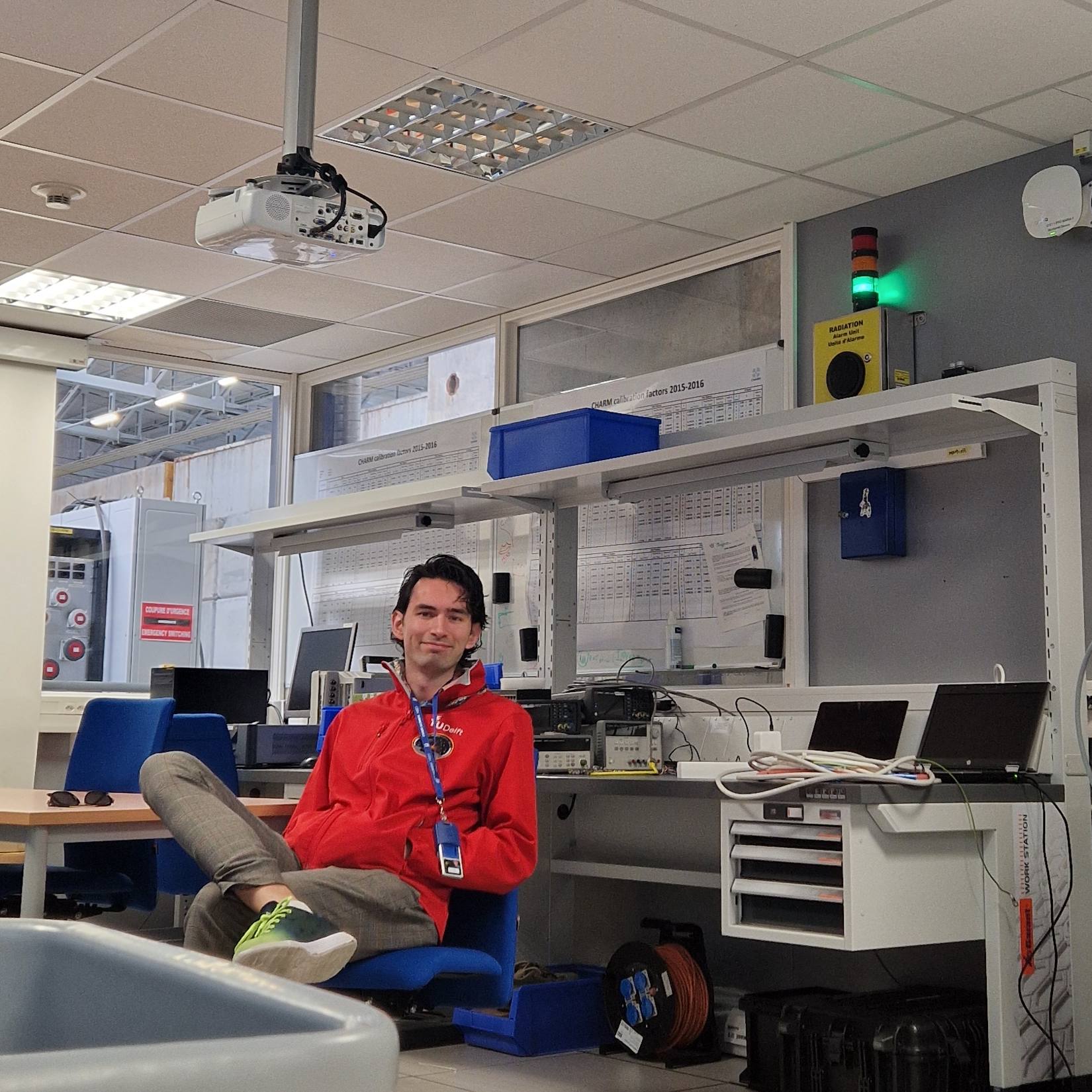
CHARM control room · CERN, Geneva · Photo: Lunar Zebro
Between 2022 and 2025 we put REDMOON, the radiation payload for our first lunar rover, through three very different radiation beams in Delft and at CERN. It works. It isn't ready to fly yet. Here's what we learned.
Why measure radiation on the Moon
The Moon has no atmosphere and no magnetic field. Particles from the Sun and from far outside the Solar System hit the surface directly, and some of them knock new particles loose from the soil. For future crews, and for every piece of electronics we send, that radiation is one of the biggest risks.
Yet we know surprisingly little about it at ground level. Only one instrument has measured it actively on the surface, on China's Chang'e-4 lander, and it never moved. A rover that measures as it walks could show how the dose changes from place to place: in the open, next to a boulder, near a crater wall.
What REDMOON is
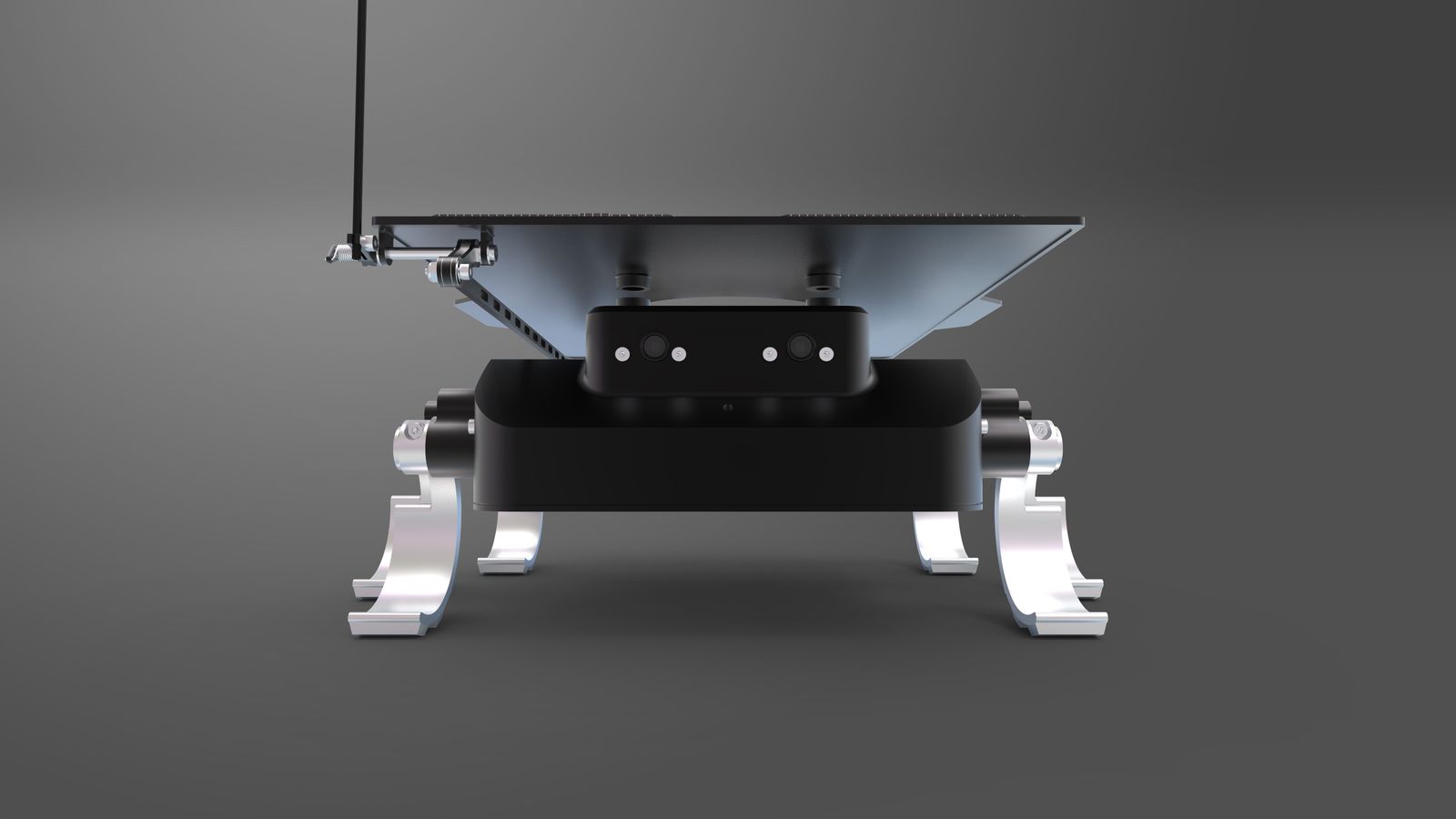
REDMOON (Radiation Environment and Dose Monitoring On-board a Nano-rover) is built around four floating-gate dosimeters, or FGDOS: small sensors made by Sealicon together with CERN. They're cheap, use very little power, and keep counting the total dose even when switched off.
The whole payload weighs 42 g and uses about 128 mW. Abhimanyu Shanbhag designed the first version in an MSc thesis (2022) and built a prototype into Belka 2, our engineering model at the time.
Three beams, three questions
No single facility on Earth can recreate radiation in space, so we used three.
Protons at HollandPTC, Delft. William De Meyere and Abhimanyu Shanbhag calibrated the sensor in a proton beam and measured its resolution, dose rate and energy response. Along the way they found a new effect in the sensor, which they called a "frequency surge", and published it in IEEE Transactions on Nuclear Science (2024) with our science director, Dr. Alessandra Menicucci.
Gamma rays at the Reactor Institute Delft. Gamma tests show how the sensors respond at the low dose rates expected on the lunar surface.
A mixed field at CERN. In space, many kinds of particles arrive at once. CERN's CHARM facility comes closest to that on Earth. We also added a thin boron-carbide layer to see whether the sensor could pick up neutrons.
What we learned
The good news: the sensors respond in a straight line with dose, which is what you want from a dosimeter, and at CERN they behaved as the literature predicts.
The less good news, in plain words:
- At HollandPTC and the Reactor Institute the sensors were less sensitive than expected.
- There's a recharging bug, most likely in the firmware.
- The power use rises as the sensors take more dose.
So the conclusion of the 2025 thesis is honest: promising, not yet flight-ready. That's exactly why we test on Earth first.
What's next
The next step is cobalt-60 testing at ESA's ESTEC centre in Noordwijk, and fixing the firmware. In the longer run the same sensors could fly on many rovers at once and map the radiation across a whole region: the information future Moon bases will need to decide where to build.